
Adil Waheed
Adil Waheed is a senior writer at The Verge, where she covers how the internet is changing how we think about money: cryptocurrency, business, fintech and Elon Musk for some reason. She joined the site in 2014, as science editor, then deputy editor running science, transportation and social media, before she got tired of being an authority figure and went back to blogging.
Articles

OpenAI signals plans for humanoid robots
HUMANOID ROBOTS
OpenAI signals plans for humanoid robots
OpenAI is doubling down on humanoid robots.
Over the past year, the ChatGPT creator has been quietly expanding its robotics department, with a spate of job listings calling for engineers and researchers with expertise in robotic control, sensing and real-world mobility.
While it’s not yet clear whether the company plans to build its own robots or create the software to power humanoids, the move indicates that OpenAI is serious about staking its claim.
OpenAI has yet to comment on the news (and did not respond to a request for comment at the time of publication). However, recent listings on its careers page show that the company is seeking mechanical engineers, robotics research engineers and software specialists.
Job posts range from mechanical and software engineers with skills in prototyping, building robot sensors and designing, implementing and optimizing "across diverse robotics hardware."
“Our robotics team is focused on unlocking general-purpose robotics and pushing towards AGI-level intelligence in dynamic, real-world settings,” OpenAI wrote in the listing.
In January, OpenAI showcased its humanoid robotics aspirations by filing a trademark application that notably included “user-programmable humanoid robots.”
Since then, several roboticists have joined the team, including Stanford’s Chengshu Li, who worked on benchmarking humanoid robots for household chores.
OpenAI has been circling the humanoid space for a while. It was a lead investor in 1X Technologies, developer of the NEO Gamma, as well as Swedish humanoid startup Figure.
Benjamin Lee, a professor of engineering and computer science at the University of Pennsylvania, told The Deep View that OpenAI’s shift into humanoid robotics is not surprising, as robotics is a natural next step for foundational research.
“Moving forward, the potential gains from research in robotics may be greater than those from research in large language models,” Lee said. “But although this is a natural next step for AI research, it is not an obvious next step for AI companies seeking to broaden technology adoption and develop profitable business models.”

Is AI weakening creativity, human connections?
RESPONSIBLE AI
Is AI weakening creativity, human connections?
AI may be growing increasingly prevalent in daily life, but concerns remain as to its effect on our minds and relationships.
A new Pew Research Center report surveyed more than 5,000 adults in the U.S. and found that a significant majority are more concerned than excited about the rise of AI.
The most common concern: weakening human skills and connections.
Findings show that:
- 53% of Americans believe AI will worsen people’s ability to think creatively
- 50% believe AI will erode people’s ability to form meaningful relationships
- Only 10% said they’re more excited than concerned about AI’s use.
Younger adults were particularly skeptical, with 61% of those under 30 stating that AI would impact people's creativity and 58% noting that it would affect relationships.
The inability to develop crucial skills such as curiosity and problem-solving, as well as lagging regulatory standards, were also highlighted.
“The technology will advance rapidly and outpace our ability to anticipate outcomes. It will therefore be extremely difficult to implement and deploy risk management strategies, plans, policies and legislation to mitigate the upheaval that AI has the real potential to unleash on every member of our society.”
Survey respondent
Despite this overall cynicism, three-quarters of respondents still said they would use AI for daily tasks as long as it was for analytical rather than personal matters.
Many also welcomed its efficiency gains, with 41% of those who rated AI's benefits highly highlighting time savings as a key benefit.
“AI… it allows us to save something we can never get back: time,” one respondent said.
The findings show a clear message: Americans are generally open to AI for practical use cases, but uneasy about it replacing what makes us human.
As one respondent noted: “as annoying and troublesome as hardships and obstacles can be, I believe the experience of encountering these things and overcoming them is essential to forming our character.”
OpenAI, Nvidia data center deal highlights AI’s hunger for power
DATA CENTERS
OpenAI, Nvidia data center deal highlights AI’s hunger for power
There never seems to be enough power to feed AI’s growing hunger.
On Monday, Nvidia and OpenAI announced a partnership to develop upwards of 10 gigawatts of AI data centers, powered by millions of the chip giant’s GPUs. As part of the deal, Nvidia will progressively invest $100 billion in OpenAI with each gigawatt deployed, with plans for the first to come online in the second half of 2026.
To put into perspective just how much power this deal is aiming to create, 10 gigawatts is enough to power roughly 8 million U.S. homes. The project will take up between 4 and 5 million GPUs, Nvidia CEO Jensen Huang told CNBC Monday, which is twice the amount the company shipped in 2024.
“There’s never been an engineering project, a technical project of this scale, ever,” Huang told CNBC. Still, Huang noted that this is “the first 10 gigawatts,” and may only be the beginning.
The bet marks these firms' ambitions that AI will completely upend the future of computing, with Huang claiming that every computing experience will eventually be “touched by AI” somehow as it breaks into “just about every single industry, every single use case we can imagine.”
For Nvidia, deals like this enable the company to "pick winners and losers in the AI race," Scott Bickley, advisory fellow at Info-Tech Research Group, told The Deep View. It allows the chip giant to build a "defensive moat" against competitors, while also potentially tempering OpenAI's ambitions in developing its own custom chips, he said.
"(Nvidia) would love to lock in the most important player in this space, OpenAI, and enhance their goal of becoming the central platform of the AI era, not dissimilar to (Microsoft's) goals in the PC era."
But getting to that future is going to require a lot of building, a problem OpenAI CEO Sam Altman recognizes. He told CNBC that in addition to investing in research and increasing product adoption, “we have to figure out how to do this unprecedented infrastructure challenge.”
Along with cementing OpenAI and Nvidia as the industry’s kingpins, this deal marks an attempt at solving that challenge – and an expensive one, at that.
It’s no secret that AI is a power hog. According to the International Energy Agency, data center power consumption is projected to account for almost half of the growth in electricity demand in the U.S. by 2030. But tech giants, once committed to bold climate initiatives, have become less keen on going green as AI ambitions cloud their vision. With AI models growing more carbon-intensive as they get smarter, a future where every computing interaction is “touched by AI” could have major environmental consequences.
Middle East’s first AI robotics lab launches
ROBOTICS
Middle East’s first AI robotics lab launches
Nvidia has teamed with Abu Dhabi’s Technology Innovation Institute to launch the Middle East’s first AI and robotics lab to develop humanoid robotics and embodied AI.
The lab will focus on:
- Building next-generation robots, including humanoids, four-legged robots and robotic arms
- Using Nvidia’s latest GPU chips, including Thor, to accelerate robotics platforms
- Developing AI models with applications across sectors
- Advancing Physical AI
- Developing large language models such as TII’s Falcon family, the Middle East’s largest AI models
By pairing Nvidia’s computing pipeline with TII’s robotics and autonomy research, the partners are positioning themselves at the crest of rising demand for generative AI in physical systems.
Dr. Najwa Aaraj, CEO of TII, said the collaboration marks a major step toward building AI-enhanced robotic systems capable of reasoning, adapting and acting in complex environments.
“We are laying the foundation for a new era of intelligent machines,” Aaraj said.
The news also comes as part of the UAE’s wider strategy to establish itself as a leader in the AI and robotics space.
The country has been ramping up its investments in the technologies in recent years, and in May. it signed a multi-billion-dollar AI Acceleration Partnership with the U.S. The deal includes plans to build a 1GW AI data center powered by Nvidia chips and a 5GW UAE-US AI Campus, both located in Abu Dhabi.
From Nvidia’s side, the partnership comes amid its growing push to move into the humanoid robotics space.
“Nvidia is particularly interested in humanoid robotics because training their control algorithms will likely require massive datasets that are hard to obtain in the real world, and are likely to be generated using simulated worlds,” Benjamin Lee, a professor of engineering and computer science at the University of Pennsylvania, told The Deep View.
“These simulations will require heavy use of GPUs,” he added. “Some companies and countries are likely building massive data centers, filling them with GPUs, and asking the sort of research questions (e.g., humanoid robotics) that could benefit from all of that computing infrastructure.”
Nvidia’s self-fulfilling investment
AI INFRASTRUCTURE
Nvidia’s self-fulfilling investment
What goes around comes around.
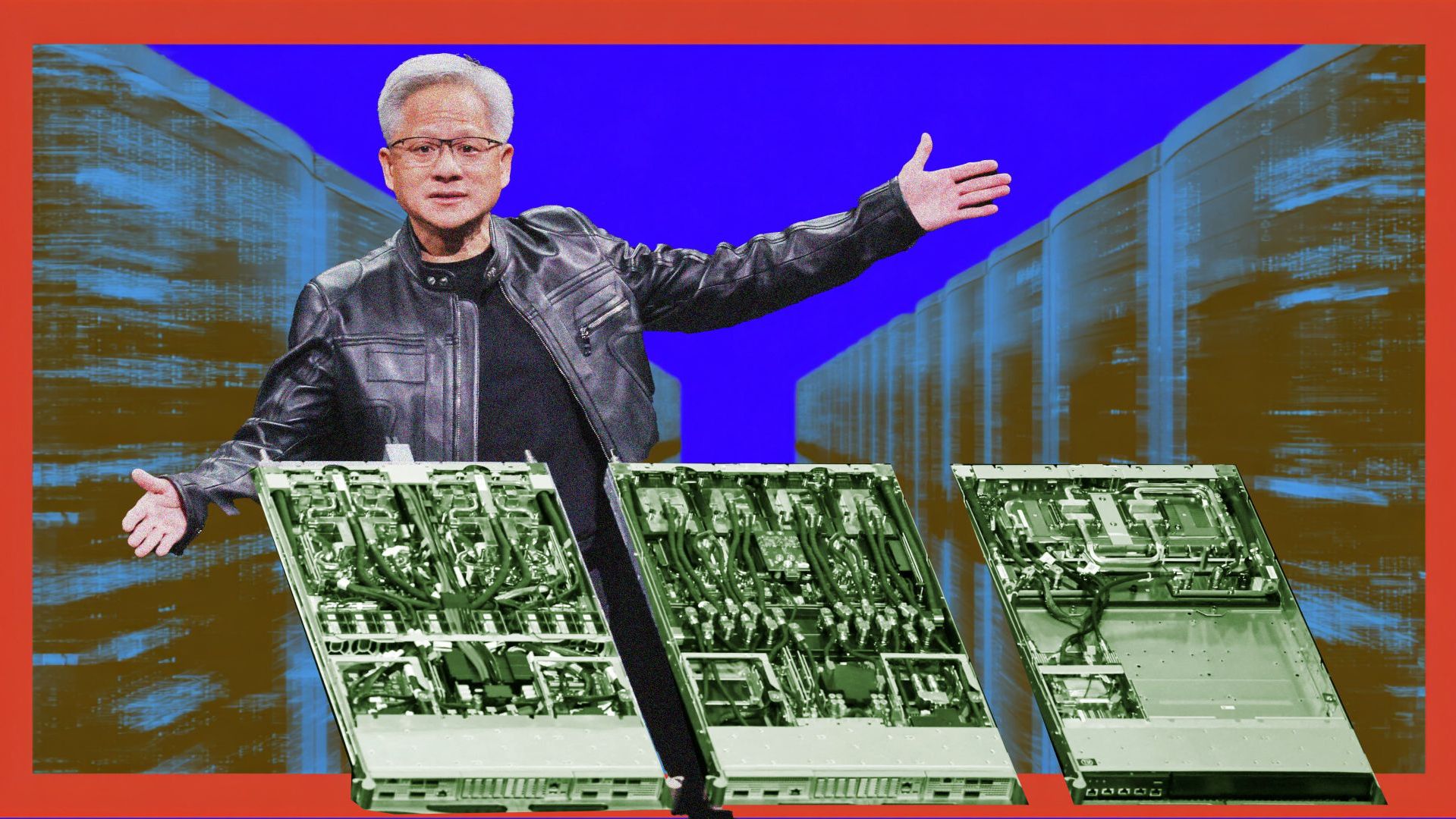
Monday’s announcement that Nvidia’s $100 billion investment in OpenAI marked one of the biggest AI infrastructure investments to date. The real beneficiary of this deal, however, might be Nvidia.
- OpenAI signed an eye-popping $300 billion contract with Oracle in mid-September to provide the model developer with computing power over the next five years.
- And Oracle, meanwhile, is feasting on Nvidia chips: The cloud giant struck a deal in May with Nvidia to purchase $40 billion worth of high-performance chips to power a data center in Abilene, Texas.
- Though the dollar amounts aren’t one-to-one, Nvidia is essentially investing it itself, allowing it to come out on top in this cycle.
— Chief AI Officer (@chiefaioffice)
4:43 PM • Sep 22, 2025
But the benefits may extend beyond the money itself. The core of OpenAI’s AI infrastructure utilizes Nvidia technology, with plans for the first gigawatt deployment on the Nvidia Vera Rubin platform scheduled for 2026.
Nvidia might now be in the position to heavily influence OpenAI’s hardware strategy toward its own products and make the firm reluctant to turn to competitors, Scott Bickley, advisory fellow at Info-Tech Research Group, told The Deep View on Monday.
At a minimum, Bickley noted the relationship can ensure “any custom-built solutions are complementary, not competitive.”
Given OpenAI’s supremacy in the market, these kinds of deals could allow Nvidia to bend the future of AI infrastructure design in and of itself.

Stan Lee hologram sparks fan debate
AI ETHICS & LIKENESS
Stan Lee hologram sparks fan debate
A new interactive hologram, "The Stan Lee Experience," premieres this week at L.A. Comic Con, and it's generating significant buzz among Marvel fans.
The project is a collaboration among Kartoon Studios’ Stan Lee Universe, spatial computing company Proto Hologram, and Hyperreal, the studio behind ultra-realistic digital humans, and has been pitched as an immersive tribute to the late Lee.
Yet the news has been met with backlash from Marvel fans, who have taken to social media to label the project “ghoulish” and “distasteful.”
"Even in death, they won't let the guy rest," one wrote on a reddit thread. "It's all pretty dystopian."
"This is wrong and incredibly disrespectful," another wrote. "There's a reason we say 'Rest in Peace’ when someone passes away.”
Creators said the project is intended as a means of paying homage to Lee, and extending his “voice and spirit” to fans.
Bob Sabouni, head of Stan Lee Legacy Programs at Kartoon Studios, wrote in a press release that the project upholds the “integrity” of Lee’s voice.
“We’ll never put words in his mouth,” he said.
Chris DeMoulin, CEO of Comikaze Entertainment, parent company of L.A. Comic Con, told The Deep View the team was hopeful sentiments would change once fans had a chance to experience the hologram for themselves.
“Those of us who helped create this all worked with Stan personally, and we believe it is fun and true to his spirit, and will help extend Stan's legacy to new generations,” he said. “We can't wait to get direct fan feedback on the entire Stan Lee Experience this weekend, and in the future.”
The controversy joins broader debates on the ethics of repurposing likenesses with AI and follows projects like William Shatner’s interactive AI-powered video archive. In 2021, the “Star Trek” icon partnered with StoryFile to let fans ask questions and interact with.

Microsoft brings Anthropic to Copilot
PRODUCTIVITY
Microsoft brings Anthropic to Copilot
OpenAI is no longer Microsoft’s only child.
On Wednesday, Microsoft announced that it’s adding Anthropic’s models to its Copilot Studio. Users can now choose between Anthropic’s Claude Sonnet 4 or Opus 4.1 and OpenAI’s GPT-4o.
Anthropic’s models, launched Wednesday in early release cycle environments, will fully roll out in the next two weeks.
- To start, users will be able to leverage Anthropic’s Claude Opus 4.1 for research tasks.
- Additionally, Opus 4.1 and Claude Sonnet 4 will be available to create and customize “enterprise-grade” agents.
- “And stay tuned: Anthropic models will bring even more powerful experiences to Microsoft 365 Copilot,” Charles Lamanna, president of business and industry for Copilot, wrote in a blog post.
Though Microsoft and OpenAI still walk arm-in-arm, bringing rival Anthropic into the mix could signal that the company is seeking to broaden its horizons.
Microsoft and OpenAI’s partnership first began in 2019 when the company invested $1 billion in the startup, followed by an additional $10 billion investment in 2023. The move united two of AI’s power players when the race was first heating up, and allowed Microsoft to carve out a significant niche in AI for the workplace, powered by OpenAI’s models.
That relationship has since grown tense as OpenAI has skyrocketed in popularity, and reached a boiling point when OpenAI tried (and failed) to acquire AI coding platform Windsurf in June. The waters have settled in recent weeks, with the two reaching a tentative agreement to revise the terms of their partnership which would allow the startup to restructure itself.
Microsoft, too, has been working on beefing up its own in-house models. Earlier this month consumer AI chief Mustafa Suleyman said the company was making “significant investments” in its own infrastructure to train AI.

Alibaba joins AI infrastructure race v2
DATA CENTERS
Alibaba joins AI infrastructure race
The surge in AI data center demand shows no signs of slowing.
Alibaba’s cloud division announced a host of plans to expand its AI ambitions, including the development of new data centers in several countries, at its annual Apsara Conference on Wednesday.
The data centers will launch in Brazil, France and the Netherlands, with additional sites coming later this year in Mexico, Japan, South Korea, Malaysia and Dubai.
Earlier this year, the company said it would invest roughly $53 billion in developing AI infrastructure over the next three years.
- However, Alibaba CEO Eddie Wu said at the conference that spending would exceed that amount, as the speed of development and demand for AI infrastructure “has far exceeded our expectations.”
- Wu noted in his opening remarks that he anticipates global AI spend to top $4 trillion over the next five years.
Beyond data centers, Alibaba also touted a host of new partnerships, including a deal with Nvidia to integrate its suite of development tools for physical AI applications, such as humanoid robots and self-driving cars, into its cloud platform.
Additionally, the company debuted its largest model yet, called Qwen3-Max, boasting more than 1 trillion parameters, which the company claimed outperformed rivals like Anthropic's Claude and DeepSeek-V3.1 in some metrics.
While Alibaba’s primary business has long been ecommerce, like many tech giants, the firm is seeking to stake its claim in AI and emerge as a considerable competitor. And, like many in the market, inking partnerships, investing in expensive data center infrastructure and building bigger and better models seem to be its strategy for doing so.
The strategy has at least caught investors’ eyes, as the company saw its share prices jump in both the U.S. and Hong Kong markets following the news.
If the multibillion-dollar data center deals of this week from Project Stargate and Nvidia have told us anything, it’s that compute is the new gold. Alibaba’s increased spending on its AI infrastructure could signal that it, too, is feeling pressure to compete. That pressure could be coming from both U.S. competitors and fellow Chinese firms. According to Bloomberg Intelligence, AI spending by Alibaba, Tencent, Baidu and JD.com could exceed $32 billion this year alone.

Lufthansa leans on AI, cuts 4,000 Jobs
JOB MARKET
Lufthansa leans on AI, cuts 4,000 Jobs
Lufthansa is cutting 4,000 jobs as it leans on AI to set higher profitability targets, the company announced on Monday.
The job cuts would primarily impact administrative roles in Germany, focusing on positions that “will no longer be necessary in the future” due to the duplication of work, the company noted.
“The profound changes brought about by digitalization and the increased use of artificial intelligence will lead to greater efficiency in many areas and processes,” the company said in its announcement.
Lufthansa is far from the first company to lean into AI to automate certain positions. Klarna and Salesforce both cut thousands of staff this year, with their CEOs confirming that AI was the reason those jobs weren’t replaced. Accenture said last week that it would “exit” staff who couldn’t be reskilled on the tech, and that 11,000 were already cut.
The string of cuts signals that companies are looking to AI as a means of automating administrative, repetitive and routine tasks. Research from Microsoft published in July found that positions such as customer service, telephone operators and sales representatives are among those that are particularly vulnerable to AI automation.
As companies seek to prove returns on their AI investments, they may be looking to headcount as a way to fulfill those promises.
or get it straight to your inbox, for free!
Get our free, daily newsletter that makes you smarter about AI. Read by 450,000+ from Google, Meta, Microsoft, a16z and more.